
Structural support systems for valuable trees with weak unions or splitting trunks — preservation instead of removal.
One free call connects you with an independent licensed tree pro who covers your ZIP code. The pro provides a free estimate — you decide from there.
(866) 313-3285 · 24/7 for emergencies
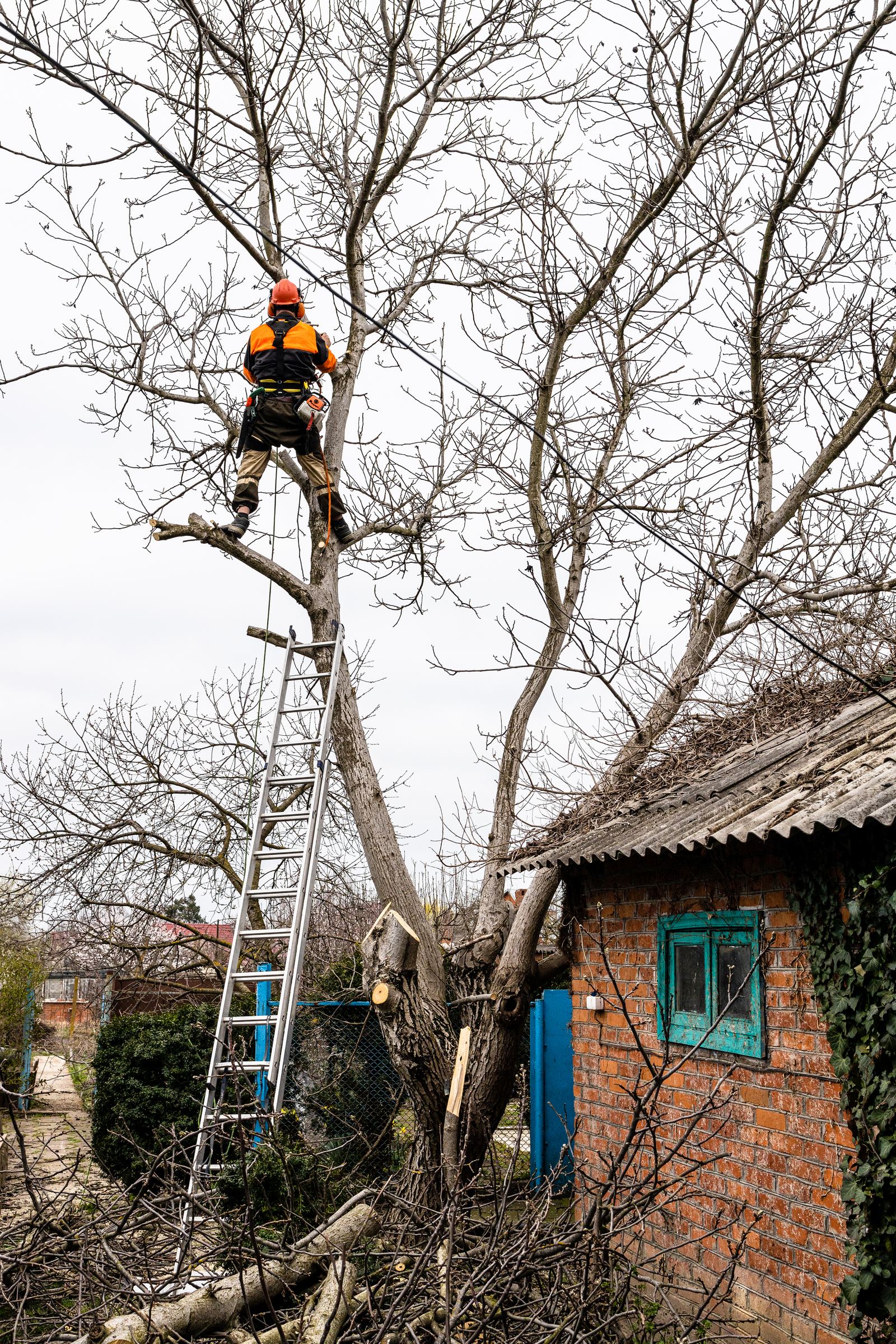
Cabling installs high-strength cable between limbs in the upper canopy, limiting how far a weak union can flex in wind; bracing adds threaded rods through the union itself, usually where a split has started. Together they let you keep a beloved or valuable tree that structure alone would condemn. Installation is precision climbing work: anchor placement at roughly two-thirds of limb length, correct tension (snug guidance, not rigid restraint), and hardware sized to the load. Modern dynamic systems (synthetic rope like Cobra) allow natural movement so the tree keeps building its own reaction wood. Every cabled tree needs inspection every few years — hardware loosens, trees grow, loads change.
Install once, inspect every 2–3 years and after major storms, adjust or replace hardware roughly every decade as the tree grows.
The tight V-crotch with bark pinched inside is the signature failure point of maples, elms, and bradford pears — it looks solid right up until it isn't. Cabling exists mostly because of this defect.
A cable at the wrong height or tension does little; hardware corroding into weak wood does less. This is genuinely certified-professional work — an amateur cable is a liability that looks like a solution.
Wraps and through-bolts installed decades ago can strangle limbs as they grow. Any inherited old-cable tree deserves a professional look at what the hardware is doing now.
Call (866) 313-3285 — TreeCrewFinder connects you free with an independent local pro experienced in support systems. For cabling specifically, ask about certification and ANSI A300 standards when you talk to the pro; correct installs follow that standard.
When the tree is healthy apart from the structural defect and it's worth keeping — shade, screening, property value, sentiment — cabling typically costs a fraction of removal plus replacement, and you keep a mature tree no nursery can sell you. When decay underlies the weak union, removal wins. The assessment tells you which tree you have.
Scales with tree size, number of cables/rods, system type (static steel vs. dynamic synthetic), and access. A single-cable install on one union is routine; a multi-limb heritage oak system is bespoke rigging. Free quote from the matched pro, free referral from us.
Steel systems: decades of hardware life, but the tree grows around the assumptions — inspect every 2–3 years, expect adjustment or replacement around year 10. Dynamic synthetic systems have manufacturer-rated lifespans (commonly 8–12 years) and are replaced on schedule.
Fresh splits at a union on an otherwise sound tree are exactly what brace rods plus cabling were invented for — many such trees serve decades after repair. A split through decayed wood, or one that's been open and weathering for seasons, is a removal conversation. Speed matters: fresh splits repair better.
Cables reduce the failure risk of the specific union they support — they don't make a tree stormproof, and they do nothing for root failure. That honest framing is why cabling decisions belong with a risk assessment of the whole tree, not just the crotch.
Just discipline: scheduled inspections, weight-reduction pruning on the supported limbs as recommended, and a check after any major wind or ice event. Put the inspection cadence in your calendar the day it's installed.
The co-dominant-stem crowd: silver and red maples, elms, oaks grown open with twin leaders, bradford/callery pears (the union-failure champions), and old multi-stem specimens like lindens and willows. If your big tree splits into two equal trunks at chest height, it's a candidate for at least an assessment.
Free referral, free estimate from the pro, no obligation. Emergencies answered 24/7.
Call (866) 313-3285 — Free Referral