
Professional trimming to keep trees clear of roofs, wires, and walkways — and looking the way they should.
One free call connects you with an independent licensed tree pro who covers your ZIP code. The pro provides a free estimate — you decide from there.
(866) 313-3285 · 24/7 for emergencies
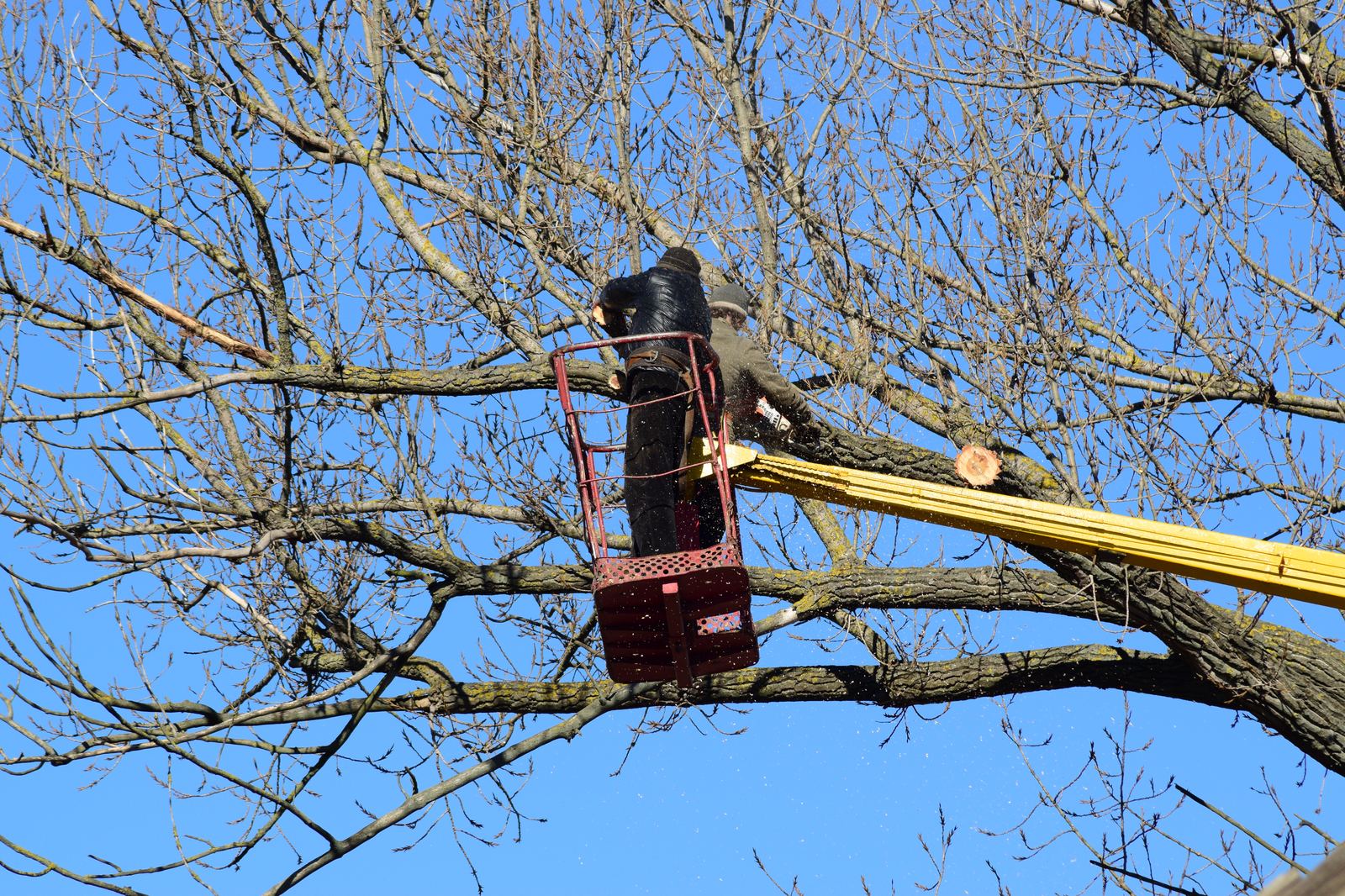
Trimming (maintenance cutting for clearance and appearance) is done from ropes, ladders, or a lift depending on height. A good crew cuts to the branch collar — never flush against the trunk and never leaving stubs — so wounds close properly. Clearance work targets specific distances: limbs off the roofline, away from the chimney, clear of the service drop, and up off driveways and sidewalks. What separates pros from "guys with saws" is what they refuse to do: no topping, no lion-tailing (stripping inner growth), and no more than about a quarter of the live canopy in one season.
Most shade trees do well on a 3–5 year trimming cycle; fast growers near structures may need attention every 2–3 years. Flowering trees are timed around bloom, and oaks in some regions are trimmed only in dormant season to avoid disease transmission.
Cutting main limbs to stubs triggers weakly-attached water-sprout regrowth that becomes MORE dangerous within a few years, while decay enters through the giant wounds. If a company proposes topping, that's your sign to keep looking.
Homeowner trimming accidents cluster in one scenario: one hand on a ladder, one on a running saw. Anything above shoulder height from a ladder is professional territory.
The insulated-looking line to your house can still deliver a lethal shock through a branch or pole saw. Pros either maintain clearance distances or coordinate a utility drop.
Rather than working through a "tree trimming near me" results page full of directories, call TreeCrewFinder at (866) 313-3285. We match you with an independent local trimming pro who covers your ZIP code — free referral, and the pro provides their own free estimate.
In everyday use they overlap, but arborists draw a line: trimming manages size, shape, and clearance (roofs, wires, views); pruning is health-focused cutting — removing dead, diseased, crossing, or structurally weak growth. Most professional visits do both in one session.
Late winter dormancy is the workhorse season: structure is visible, disease pressure is low, and trees compartmentalize wounds fast in spring. Exceptions matter — spring bloomers get trimmed right after flowering, and oaks in oak-wilt regions should only be cut in dormant months. Dead or hazardous limbs come off any day of the year.
It scales with tree height, how many trees, how much cutting each needs, and how hard the tree is to access. Line-clearance and over-roof work takes longer than open-yard work. The independent pro quotes it free — the referral itself costs nothing.
In most states you may trim growth up to the property line at your own expense, but you can't enter their yard or harm the tree's health without liability. The neighborly (and cheaper) route is a shared trimming job with the costs split — a pro can quote it as one visit.
Topping is the fastest way to turn a sound tree into a hazard: the stubs decay, and the regrowth that shoots up is attached only to the outer wood — far weaker than the limbs that were removed. If height is the problem, proper crown reduction cuts back to strong lateral limbs and keeps the tree structurally honest.
Trees with limbs over or near the roof are worth a look every 2–3 years, faster for quick growers like silver maple, poplar, and willow. Open-yard shade trees can usually run 3–5 years between visits. An annual walk-around after leaf drop — looking for deadwood and cracks — is free and catches most problems early.
Proper thinning doesn't trigger runaway regrowth — the tree redirects energy to remaining limbs gradually. It's improper heading cuts and topping that cause explosive, weakly-attached sprouting. That difference is most of what you're paying a professional for.
Free referral, free estimate from the pro, no obligation. Emergencies answered 24/7.
Call (866) 313-3285 — Free Referral